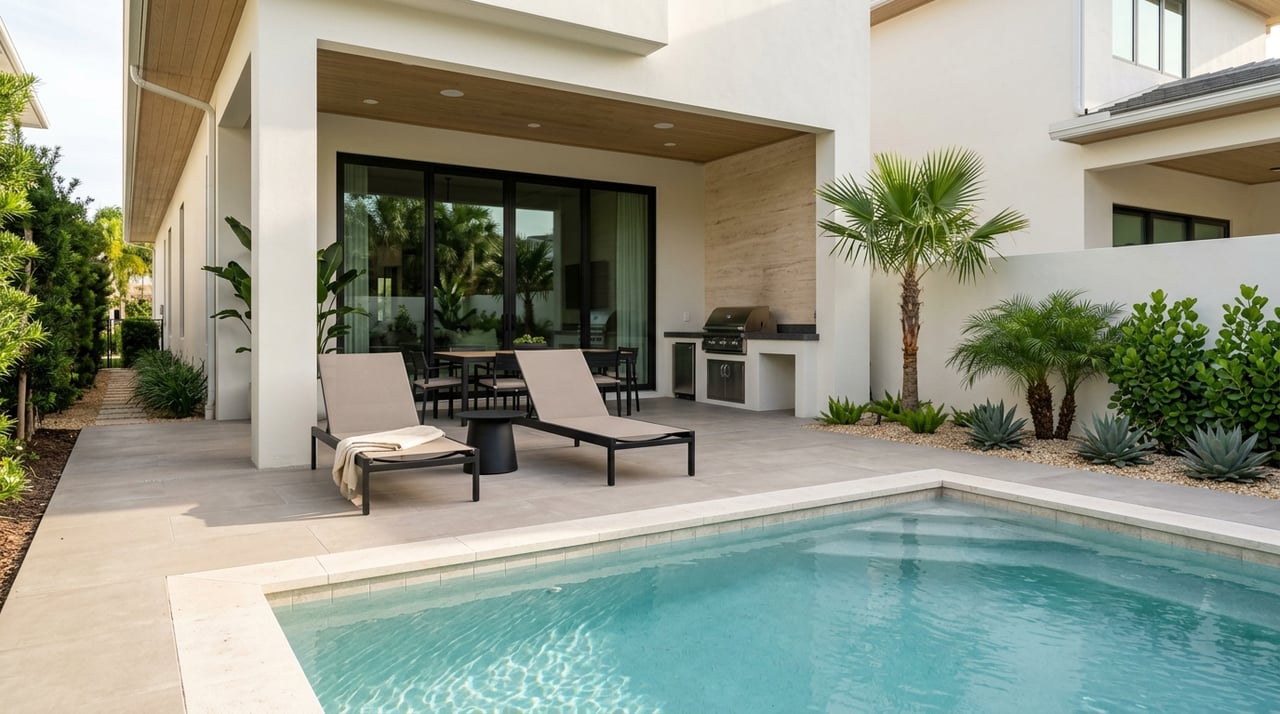
Investing in Davenport Vacation Homes: Key Factors to Review
Thinking about buying a vacation-ready home in Davenport? You are not alone, and for good reason. This part of Central Florida attracts buyers who want a property they can enjoy personally while also exploring income potential, but the numbers only work when you look beyond the purchase price. In this guide, you will learn the key factors to review before you make an offer, from local rules and taxes to financing and flood risk. Let’s dive in.
Davenport has become a popular choice for vacation-home buyers because of its location and travel convenience. It sits near Interstate 4 and Highway 27, with access to Orlando, the Disney parks, dining, and both Gulf and Atlantic Coast beach destinations.
Polk County tourism materials describe Davenport as a major vacation-rental hub. They note that more than 80% of Polk County’s vacation rental homes are located there, and many are less than ten miles from Walt Disney World. That tells you this is not a side market. It is a location with a well-established short-stay identity.
For personal use, Davenport also offers public recreation spaces and community amenities. Official city information highlights places like Tom Fellows Community Center, Wilson Park, Lake Play, Jamestown Park, and Lewis W. Mathews Sports Complex. For many buyers, that mix supports both owner enjoyment and guest appeal.
Before you get attached to a home, define how you plan to use it. A property meant mostly for your own seasonal stays may be financed and underwritten differently than one you intend to treat as an income-focused investment.
That distinction matters early, not later. Your occupancy plan can affect financing terms, reserve requirements, tax planning, licensing, and even the kind of community rules you need to review.
If you can answer those questions clearly, you will make better decisions on neighborhoods, home type, and monthly cost expectations.
One of the biggest mistakes vacation-home buyers make is assuming every Davenport home can be used the same way. In reality, you need to confirm what is allowed at the property level and at the local level before you close.
Davenport’s land development regulations state that short-term rental units are allowed under State of Florida statutes, but that does not mean every property is automatically ready to operate. State licensing rules still apply, and local approvals may also come into play.
The City of Davenport also requires an annual Business Tax Receipt for any business located or operating within city limits. If the business is inside the city, both city and Polk County business tax receipts are required. The city also notes that having a business tax receipt does not by itself equal approval, certification, or licensure.
This is where having a knowledgeable local broker matters. A home that looks ideal on paper may have restrictions that change the entire investment picture.
If you plan to rent the property on a short-term basis, licensing is a serious issue. According to the Florida Department of Business and Professional Regulation, a vacation rental includes certain condo units and one-to-four-family dwellings used as transient public lodging establishments.
If a property is rented more than three times in a calendar year for periods of fewer than 30 consecutive days, or if it is advertised as regularly rented for those stays, it should hold a DBPR vacation rental license. Florida law also requires new public lodging establishments and new owners of existing establishments to obtain a license before beginning operation.
That means licensing should be part of your pre-closing review, not an afterthought once you get the keys. If a property has been used as a vacation rental before, you still need to confirm what applies to you as the new owner.
A Davenport vacation-ready home can produce opportunity, but only if your cost projections are realistic. One of the most important parts of underwriting is understanding the tax stack.
First, property taxes are based on assessed value and millage rates set by the applicable taxing authorities. In Polk County, the homestead exemption applies to permanent primary residences. It is not available for rental properties, vacation homes, or investment real estate.
That means you should not estimate ownership costs as if the property will receive primary-residence tax treatment. Doing that can make a deal look stronger than it really is.
Polk County requires Tourist Development Tax to be remitted monthly by owners or managers. If you plan to rent short term, those taxes are not minor details. They are a core part of your operating model.
Many buyers focus on mortgage payment and projected rent, but vacation-ready ownership usually involves more moving parts. You need to think in terms of total carrying cost, not just loan payment.
Ordinary costs vary by property, but they can include utilities, cleaning, maintenance, and routine upkeep. Depending on the community and property type, you may also need to account for HOA dues, condo fees, or resort-related costs if they apply.
Even if you plan to use the home yourself part of the year, it should be stress-tested like an investment. That gives you a clearer picture of whether the property still works during slower months, higher expense periods, or vacancy gaps.
Flood risk is another issue that can change your numbers quickly. Davenport states that flood insurance is separate from homeowners insurance, may be required by lenders in high-risk areas, and often has a 30-day waiting period before coverage becomes effective.
That timing matters if you are trying to move quickly after closing. You do not want to assume flood coverage can be turned on instantly.
The city also notes that if a structure is damaged or improved by 50% or more, current floodplain rules can apply. That can lead to additional compliance requirements, including elevation or other related costs.
Financing for a Davenport vacation-ready home is not always straightforward. The lender’s occupancy classification can shape your rate, down payment expectations, reserves, and overall approval path.
Fannie Mae distinguishes second homes from investment properties based on occupancy. It also states that if the lender identifies rental income from the property, the loan may still be delivered as a second home if that income is not used for qualifying purposes and other second-home rules are met.
Reserve requirements can also differ. Fannie Mae says DU loans generally require two months of reserves for a second home and six months of reserves for an investment property, with more reserves possible for borrowers who already own multiple financed properties.
For many buyers, conventional financing is the more common fit for true vacation-home or small-investor flexibility. By contrast, VA loans are for primary residences, and FHA guidance does not treat a vacation home as a secondary residence in this context.
If you will not live in Davenport full time, management and security should be part of your plan. A vacation-ready home often requires systems for guest turnover, maintenance coordination, and property checks when you are away.
The City of Davenport Police Department offers vacation patrol requests, which can be helpful for absentee owners or seasonal users. That does not replace a full ownership plan, but it is one example of a local resource worth knowing about.
You should also think through practical ownership questions before buying:
The strongest vacation-home buyers treat the purchase like both a lifestyle decision and a business decision. That means testing the home against rules, financing, taxes, and ongoing ownership demands before you negotiate terms.
A smart pre-offer process usually includes reviewing the property’s location inside or outside city limits, checking rental restrictions, confirming likely licensing requirements, estimating the full tax burden, and asking a lender how the file will be classified. When those answers are clear, you can evaluate the opportunity with confidence.
In a market like Davenport, that kind of preparation can protect you from expensive surprises. It can also help you spot the properties that are truly aligned with your goals.
If you want guidance that combines local market knowledge with financing and investment perspective, Bianca Janice Williams can help you evaluate Davenport opportunities with a clear strategy.





Experience a real estate partnership built on trust, expertise, and genuine care. Bianca brings a lifelong understanding of what “home” truly means to every client and every decision.
626 N ALAFAYA TRL, UNIT 206-7B ORLANDO, FL 32828